
What Do You Do With the Pigs After Trapping?
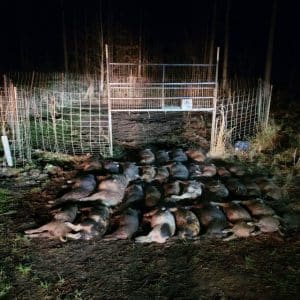
“What do you do with the pigs?” is one of the most common questions we’ve received since the beginning o
f our business. Landowners dealing with feral hog damage want a clear and responsible answer, and the process focuses on humane, efficient removal that protects both the property and long-term trapping success.
At JAGER PRO®, hogs are euthanized inside the trap immediately after capture using a .22 caliber suppressed rifle with subsonic ammunition. This method is intentional, reducing stress on the animals while helping maintain the effectiveness of the trapping system. Acting quickly ensures the situation is controlled and prevents unnecessary disruption to the surrounding environment.
Why This Process Matters for Trap Success
Feral hogs are highly intelligent and social animals. When they become stressed or alarmed, they can alert nearby sounders and create long-term trap avoidance, making future captures more difficult.
By handling the situation quickly and quietly, vocalizations are minimized. This prevents other hogs from becoming “educated” and helps ensure continued success with systems like the M.I.N.E.™. Consistency is key when managing hog populations, and reducing negative conditioning plays a major role in long-term results.
M.I.N.E.® Trapping System – JAGER PRO Store
Maintaining a Clean and Effective Trap Site
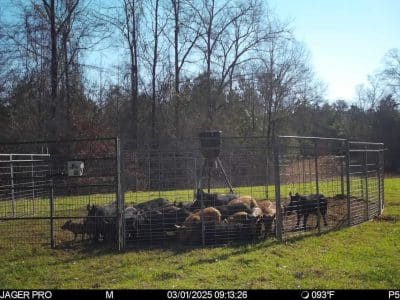
Another important factor is the condition of the trap itself. Leaving hogs alive in an enclosure for extended periods can lead to agitation, excessive movement, and damage to the trap environment.
This often results in:
- Waste buildup inside the trap
- Increased stress behavior
- A less inviting environment for other hogs
Addressing the situation immediately helps keep the area clean, controlled, and ready for repeat captures. A well-maintained trap site improves the likelihood that additional hogs will enter without hesitation. It’s also worth noting that blood inside the enclosure does not deter future sounders from entering, which further supports this approach.
Is This Method Humane?
A major concern for many landowners is whether this approach meets humane standards. The American Veterinary Medical Association recognizes a properly placed gunshot to the brain as an acceptable form of euthanasia.
According to their guidelines, this method provides immediate insensibility, rapid unconsciousness, and minimal suffering when performed correctly. In field conditions, especially in rural environments, this is often the most practical and responsible option available.
https://www.avma.org/KB/Policies/Documents/euthanasia.pdf
What Happens After Euthanasia
After euthanasia, when people ask what do you do with the pigs, the answer depends on local regulations, landowner preferences, and the condition of the animal. Understanding what do you do with the pigs is important, as some landowners choose to process the meat for personal consumption if the animal is suitable and properly handled.
When considering what do you do with the pigs, feral hog meat can be used in a variety of ways, including ground
pork, sausage, or slow-cooked cuts. Knowing what do you do with the pigs also means recognizing that proper handling, storage, and preparation are essential to ensure safety and quality. In other situations, what do you do with the pigs may involve disposing of carcasses according to local guidelines or using them for supplemental purposes where permitted.
Why Having a Clear Plan Matters
Having a defined process in place provides several key benefits. It improves overall trapping efficiency, prevents trap avoidance behavior, and maintains a cleaner, more effective trapping environment.
It also supports responsible wildlife management by ensuring that animals are handled in a humane and ethical manner. A consistent approach leads to better long-term results, reduced property damage, and more effective population control.
Final Thoughts
When people ask what do you do with the pigs, the answer goes beyond simple removal. It reflects a thoughtful approach that balances humane practices with proven field strategy to achieve the best possible outcome for both the land and the animals.
By acting quickly and responsibly, landowners can reduce property damage, improve trapping success, and maintain a more controlled environment. This approach also helps prevent trap avoidance, ensuring that future efforts remain effective and consistent over time.
Related Knowledge Base Posts -
No related posts found !